The Evolution (and Ongoing Appeal) of Men’s Speedo-Style Spandex Briefs
—plus why many guys eventually try bikinis, thongs, and G-strings
1) What we mean by “Speedo spandex briefs”
Colloquially, “Speedo” gets used for any tight, brief men’s swimsuit. Technically, it’s a brand; the cut is a spandex/nylon brief with a low rise, elastic waistband, and full seat coverage. Modern fabrics are typically polyamide (nylon) + elastane (spandex/LYCRA®) for stretch, quick-drying, and colorfastness.
2) A (quick) history in five waves
Wave 1: Post-war performance & the birth of the brief (1950s–60s)
- Competitive swimmers sought less drag than wool trunks could offer.
- Nylon replaced heavier fabrics; elastane (commercialized in the late 1950s) added snap-back stretch.
- The snug racing brief became the standard in pools and on podiums, cementing the silhouette as performance gear rather than fashion.
Wave 2: Beach culture & global visibility (1970s)
- Television coverage of international meets normalized the look.
- Surf and beach scenes, especially in Australia, Southern Europe, and Latin America, treated briefs as everyday swimwear for men, not just athletes.
- Colors and stripes took off; the suit became a badge of athleticism and a sun-friendly alternative to heavy shorts.
Wave 3: Fitness boom & gym-to-beach crossover (1980s–90s)
- Aerobics/fitness culture valorized lean physiques; the brief read as confident and sporty.
- Triathlon and water polo reinforced the cut’s functional credibility.
- Meanwhile, looser boardshorts dominated some markets (e.g., North America), creating a culture split: briefs at pools and in competitive contexts vs. longer shorts at casual beaches.
Wave 4: Tech fabrics, design variety, and niche revival (2000s–2010s)
- Better knits improved opacity, chlorine resistance, and compression.
- Brands diversified rises (high/low), leg height, and pouch shaping; fashion labels introduced bold prints, metallics, and color blocking.
- Social media and travel expanded exposure to brief-friendly beach norms (Mediterranean, Brazil, Australia), nudging adoption elsewhere.
Wave 5: Confident minimalism & micro-silhouettes (late 2010s–today)
- A broader menswear shift toward body-con fits made briefs feel current again.
- Micro-briefs, bikini cuts, and even thong/G-string swimwear gained traction among men who like maximum sun, minimal tan lines, and a clean, athletic profile.
- The suit’s image evolved from purely “racer” to stylish, intentionally minimal swimwear.
3) Why guys keep choosing spandex briefs
Performance: Minimal fabric, low drag, stays put in surf or during laps.
Comfort: Stretch supports without ballooning; dries fast; no clinging boardshort liners.
Tan & aesthetics: More sun coverage with cleaner lines; shows the physique instead of hiding it.
Confidence signal: Wearing a brief reads as comfortable-in-your-skin—a style flex many find attractive.
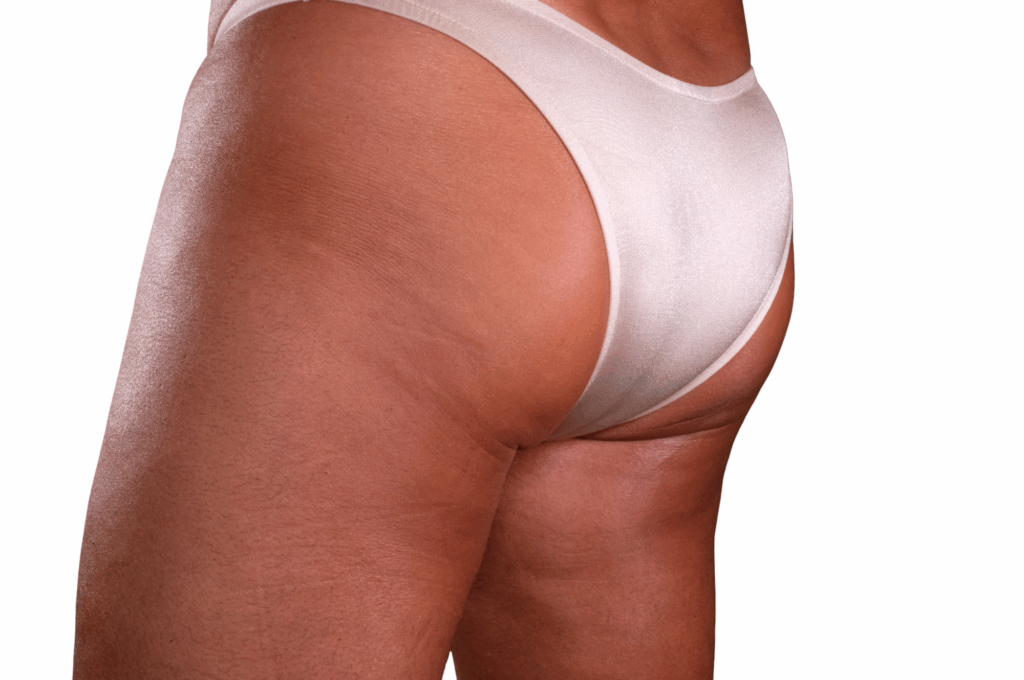
4) Fit & construction: what matters most
- Rise:
- Classic/medium rise = timeless, training-friendly.
- Low rise = fashion-forward; lengthens the torso visually.
- Leg height: Higher cuts emphasize quads; lower leg is more conservative.
- Front shaping:
- Flat front = racing look, minimal emphasis.
- Anatomical/pouched = more comfort and space, often better visually.
- Seat coverage: Full coverage for sport; slightly trimmed back for style.
- Fabric & lining: Look for 15–22% elastane for snap; front lining for opacity; chlorine-resistant blends if you lap-swim.
- Waistband: Internal drawcord for surf and training; sleek elastic for sunbathing & lounging.
5) Style taxonomy of brief variants
- Racing brief: Athletic cut, secure drawcord, matte fabric.
- Fashion brief: Lower rise, prints, metallics, contrast piping.
- Micro-brief: Skimpier sides (often 1–2 cm), bolder V-shape.
- Compression/contour brief: Slight shaping or panels for support and silhouette.
- Chlorine-proof training brief: Durable tech fabric for pool warriors.
6) Social norms & regional vibes
- Europe, Australia, Brazil: Briefs are mainstream beachwear; no one blinks.
- North America: Pools and water sports normalized briefs; beaches vary by scene. Fitness beaches, resort pools, and travel destinations skew brief-friendly.
- Tip: If you’re unsure, wear shorts over your brief and strip down when you’re poolside or settled on the sand—you’ll see the local pattern instantly.
7) The natural progression: bikini → thong → G-string
Plenty of men find that once a standard brief feels normal, more minimal cuts become tempting—mainly for sun and comfort. Here’s how that progression typically looks and why it works.
A) Bikini briefs (the first step smaller)
What changes: Lower rise, narrower sides, slightly smaller back—still a “brief,” just sleeker.
Why men try it:
- Better tan lines with a still-familiar feel.
- Looks great on the waist-to-hip line; flattering on athletic or lean builds.
Fit tips: Seek a secure front (lined or denser knit) and a back that won’t creep when wet.
B) Thong swimwear (maximum sun, minimal fabric)
What changes: Full front with a minimal back strap; moderate to cheeky front coverage depending on brand.
Why men try it:
- All-over tanning and no soggy fabric bunching when swimming.
- Clean, sculptural back view; popular in Europe/Latin America and at many resort pools.
Fit tips: The waist tension must be perfect—snug enough to stay put, not so tight it digs. Look for soft, flat elastics and a lined front.
C) G-strings (the ultralight endgame)
What changes: A string or filament back with a small triangle or pouch in front.
Why men try it:
- Barely-there comfort while sunbathing.
- Minimal tan lines; feels like wearing almost nothing.
Fit tips: Prioritize quality pouch fabric for opacity; adjust strings so the center strap sits true (not skewing to one side).
8) How to choose your next step (brief → bikini → thong → G)
Use this quick decision grid:
- You lap-swim or surf → Start with racing brief; consider a fashion brief for beach days.
- You want better tan lines → Bikini brief or micro-brief.
- You lounge more than you swim → Bikini or thong.
- You love a barely-there feel → Thong first; if you like it, try a G-string.
- You’re modest up front → Choose lined fronts, slightly thicker fabrics, or contour pouches that shape without over-revealing.
- You want less emphasis → Opt for darker solids or matte fabrics and a flatter front.
9) Confidence, etiquette, and settings
- Resort & cruise pools: Often the most accepting places to try smaller cuts first.
- Fitness beaches & lake spots: Briefs and micro-briefs fit right in.
- Family beaches: A standard brief or higher-coverage bikini is usually the sweet spot.
- Spa days & hotel pools: Bring two suits—a classic brief for public areas and a thong/G for private cabana or adult-only zones if permitted.
Etiquette essentials:
- Bring a towel wrap for walking to/from the water if you’re unsure of local norms.
- Mind opacity when wet (lining helps).
- Keep posture relaxed; confidence reads as normal and puts others at ease.
10) Care & longevity
- Rinse after chlorine; hand-wash in cool water with gentle detergent.
- Air-dry out of direct sun to preserve elasticity and color.
- Rotate suits; elastane lasts longer if it gets rest days.
- Avoid rough pool decks—micro-knits can snag.
11) Sizing notes (crucial for minimal cuts)
- If between sizes, size up for lounging, true-to-size for training.
- For bikinis/thongs, prioritize waist stability: too loose = slip; too tight = dig.
- Front depth matters: an anatomical pouch increases comfort across body types.
12) Why this progression keeps growing in popularity
- Travel + social media: Exposure to brief-friendly beach cultures makes minimal cuts feel normal—and aspirational.
- Fitness aesthetics: Men reward the work they put into training by choosing clean, revealing silhouettes.
- Practical comfort: Less fabric means faster drying, fewer tan lines, and no ballooning in the surf.
- Design innovation: Better knits, smarter pouches, and refined elastics make micro styles wearable, not just daring.
13) Starter kits (by vibe)
- Athletic set: Racing brief (chlorine-resistant), fashion brief (low rise), micro-brief for sunny days.
- Tan-max set: Bikini brief + thong; optional G-string for private/resort spaces.
- Travel set: One dark solid (versatile), one bright/print (fun), one micro/bikini (sun).
- Beginner cautious set: Classic brief + slightly lower-rise brief; add a bikini once you feel at home.
14) Final word
Spandex briefs earned their place through performance, but they’ve endured because they look sharp, feel great, and suit modern beach life. For many men, the journey naturally continues to bikini cuts, thongs, and G-strings—not as shock value, but as comfort-driven, sun-smart design. Start with a brief that fits impeccably, learn what you like about rise and front shaping, then—when curiosity kicks in—step lighter. The water’s perfect.