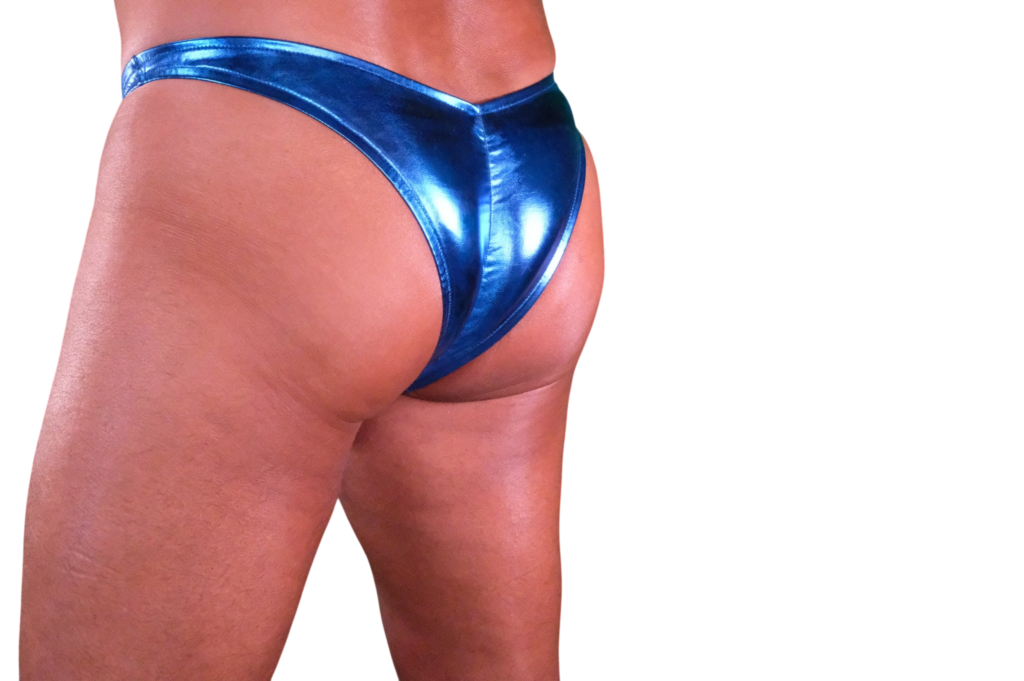
Gay Spandex Swim Briefs: Why They Are So Popular and How the Look Is Spreading into Straight Men’s Fashion
Men’s swimwear is going through a major fashion shift. For years, especially in much of the United States, loose trunks and long board shorts dominated beaches and swimming pools. Meanwhile, another side of men’s swimwear culture was embracing something completely different: tight, colorful, body-conscious spandex briefs, bikinis, thongs, and increasingly tiny micro swimsuits.
Gay men’s beach and resort fashion has been highly visible in this movement.
Spandex swim briefs have long been popular among many gay men because they are flattering, expressive, comfortable for swimming, and unapologetically body-conscious. At gay beaches, pool parties, resorts, cruises, and vacation destinations, it is common to see men’s swimwear extend far beyond the traditional racing brief.
Bikinis, Brazilian cuts, thongs, G-strings, sculpted pouches, low-rise briefs, micro bikinis, and other adventurous designs all have a place.
But something important is happening: these styles aren’t staying within gay fashion culture.
Straight men are increasingly discovering many of the same silhouettes.
The result is a blurring of old swimwear boundaries. A tiny bikini or thong might once have been stereotyped as “gay swimwear.” Today, seeing the swimsuit tells you increasingly little about the sexual orientation of the man wearing it.
It tells you something much simpler:
He likes that swimsuit.
What Are Gay Spandex Swim Briefs?
There really isn’t a technical category of swimsuit called a “gay swim brief.”
A swim brief doesn’t have a sexual orientation.
The phrase generally describes styles that have become particularly visible or popular within gay men’s fashion and beach culture.
These can include:
- Classic racing and Speedo-style briefs
- Low-rise spandex bikinis
- Brazilian-cut briefs
- String bikinis
- Men’s thongs
- G-strings
- Contoured pouch swimsuits
- Minimal-bulge and compression designs
- Micro bikinis
- Micro thongs
- Ultra-micro swimsuits
What distinguishes the category culturally is often not the construction itself but the willingness to experiment with fit, color, body exposure, pouch design, and minimal coverage.
Gay men’s swimwear culture helped demonstrate that men’s swimsuits didn’t have to be boring.
Why Spandex?
Spandex is particularly well suited to this fashion revolution because it does something loose swimwear cannot:
It follows the body.
A good stretch swimsuit conforms to the hips, buttocks, thighs, and genital area while allowing freedom of movement.
That creates a fundamentally different aesthetic from board shorts.
Instead of hiding the body beneath clothing, spandex allows the body to become part of the swimsuit’s appearance.
For men who enjoy showing their physique, that is a major attraction.
The legs are visible.
The hips are visible.
The butt is defined.
The waist isn’t hidden beneath bulky fabric.
And depending upon the pouch construction, the natural male front contour may also be visible.
For body-conscious swimwear, spandex is difficult to beat.
Gay Men Helped Make Men’s Swimwear More Adventurous
Gay men’s fashion has often provided room for experimentation with traditional masculinity.
That has been particularly visible in swimwear.
When mainstream men’s departments were filled with relatively similar trunks, specialized swimwear brands and gay-oriented retailers were offering dramatically different alternatives.
Lower rises.
Higher legs.
Brighter colors.
Metallic fabrics.
Neon.
Animal prints.
Tiny sides.
Brazilian backs.
Thongs.
Micro pouches.
Styles traditionally associated with women’s swimwear were re-engineered for male bodies.
The underlying message was simple:
Why should women have all the interesting swimsuits?
That question now resonates well beyond gay men’s fashion.
The Gay Beach Helped Normalize the Swim Brief
Environment matters enormously to fashion.
Walk onto a beach where nearly every man is wearing board shorts and a tiny bikini immediately attracts attention.
Walk onto a beach where hundreds of men are wearing briefs, bikinis, and thongs and suddenly the same swimsuit seems completely ordinary.
Gay beaches and resorts have provided exactly this kind of environment.
They allowed men to see other men wearing minimal swimsuits confidently.
That visibility matters.
A man who might never imagine wearing a bikini can see dozens of different body types wearing one and realize that the style isn’t limited to professional models.
Fashion spreads through exposure.
You see it. You get used to it. You try it. It becomes normal.
Why Gay Men Love Spandex Briefs
There isn’t one explanation, because gay men are no more uniform in their clothing preferences than straight men.
But several characteristics help explain the popularity of minimal swimwear.
Spandex briefs are practical for swimming. They dry quickly, don’t balloon underwater like loose shorts, and allow excellent freedom of movement.
They also provide enormous fashion variety.
A man can choose athletic, sophisticated, playful, sexy, conservative, flamboyant, masculine, feminine, or gender-fluid designs while remaining within the broad category of brief-style swimwear.
And, of course, some men simply enjoy showing their bodies.
There is nothing particularly mysterious about that.
Body Confidence Is Part of the Culture
Minimal swimwear requires a different attitude toward the male body.
Board shorts conceal much of it.
A bikini doesn’t.
A thong conceals even less.
Gay beach and pool culture has helped normalize the idea that a man’s legs, buttocks, hips, stomach, and natural genital contour don’t necessarily have to be hidden beneath loose fabric.
This doesn’t mean everyone wearing minimal swimwear has perfect body confidence.
Far from it.
Sometimes wearing the swimsuit is how confidence develops.
The first experience can feel intimidating. After several beach days, the same swimsuit can feel completely ordinary.
The Pouch Became Fashion
Another major contribution of modern men’s spandex design is treating the front pouch as a genuine fashion element.
Traditional swimwear usually treated the genital area as something that simply needed enough room.
Contemporary designs can approach it much more deliberately.
A swimsuit can have an anatomical pouch that follows the natural body.
It can have a supportive pouch.
It can enhance projection.
It can compress the anatomy.
It can produce a tiny micro-bulge profile.
It can create a smoother or more gender-neutral front.
That diversity means men can choose not only how much swimsuit they wear, but also how the swimsuit presents their anatomy.
Then Came Men’s Bikinis
The bikini was a logical progression from the traditional swim brief.
Make the sides narrower.
Lower the waistband.
Raise the leg openings.
Reduce the rear.
Suddenly the traditional men’s brief becomes much more fashionable and revealing.
Gay men’s swimwear brands embraced these possibilities enthusiastically, helping establish the men’s bikini as something far more interesting than simply a smaller racing suit.
And increasingly, the bikini isn’t perceived as exclusively gay.
Straight men are discovering the same benefits.
The Men’s Thong Crosses the Boundary
The thong may be an even clearer example of changing attitudes.
For years, many people regarded thong swimwear for men as an extremely niche choice, often stereotyping the men who wore them.
That stereotype has weakened as men’s fashion has become more adventurous.
Straight men see women wearing thongs at beaches.
They see gay men wearing them.
They see influencers, models, athletes, and ordinary vacationers experimenting with smaller swimsuits.
Eventually some ask a very reasonable question:
Why can’t I wear one too?
The answer is that they can.
Sexual orientation doesn’t determine how much rear coverage a swimsuit requires.
Straight Men Are Discovering Body-Conscious Swimwear
The movement into mainstream men’s fashion isn’t simply about gay styles being copied by straight men.
It is part of a broader change in masculinity.
Men have become more comfortable with fitted clothing.
Slim-cut suits became mainstream.
Compression shirts became normal.
Running tights became common.
Cycling clothing was already body-conscious.
Gym fashions became tighter.
Shorts became shorter.
Once men become comfortable displaying their bodies in one setting, accepting a smaller swimsuit becomes easier.
The transition from compression shorts to a swim brief isn’t nearly as radical as the transition directly from knee-length board shorts to an ultra-micro bikini.
International Fashion Has Also Played a Role
American swimwear attitudes have never represented the entire world.
Brief-style men’s swimwear has long been familiar in many international swimming and vacation settings.
Travel exposes men to different standards.
A straight American man accustomed to board shorts may vacation somewhere that fitted swim briefs are unremarkable.
Suddenly the cultural rule he assumed was universal looks much more like a local fashion preference.
That experience can be liberating.
He returns home realizing that swimwear doesn’t have to communicate anything about his sexuality.
From Briefs to Bikinis to Micros
Once men accept the basic swim brief, experimentation can happen quickly.
A common fashion progression might look something like:
Trunks → swim briefs → low-rise briefs → bikinis → Brazilian cuts → thongs → micro bikinis → micro thongs.
Not everyone follows that path, of course.
Many men find one level of coverage they love and stay there.
Others discover that each smaller swimsuit makes the previous one seem conservative.
That phenomenon has helped fuel the micro-swimwear movement.
Gay Micro Swimwear Pushes the Limits
At the adventurous end of the spectrum are micro and ultra-micro designs.
These swimsuits ask a simple design question:
How much fabric does a men’s swimsuit actually need?
The answer can be surprisingly little.
Spandex makes it possible to create incredibly small pouches, narrow sides, tiny rear panels, and thong or G-string backs while maintaining a secure stretch fit.
These designs have developed an enthusiastic following among men who enjoy extreme minimalism.
And once again, the audience isn’t exclusively gay.
Straight Men Wearing “Gay Swimwear”
This is where the terminology starts breaking down.
Suppose a straight man wears a tiny pink spandex bikini that would have been marketed primarily toward gay men twenty years ago.
Is it still gay swimwear?
The better question might be whether the label is useful anymore.
A swimsuit is fabric.
Sexual orientation belongs to the person.
A straight man doesn’t become gay because he wears a thong any more than a gay man becomes straight because he wears board shorts.
As more straight men embrace historically gay-associated fashions, these old visual codes become less reliable.
Women Can Help Drive the Change Too
Partners can also influence men’s willingness to experiment with swimwear.
A man may initially assume his girlfriend or wife wants him wearing conservative trunks, only to discover that she likes seeing him in fitted briefs or a bikini.
That can be an important confidence boost.
Women have spent decades navigating swimwear choices ranging from conservative one-pieces to tiny thong bikinis. Some appreciate seeing men gain access to the same variety and body-conscious fashion choices.
The result can be couples wearing equally minimal swimwear rather than the traditional combination of a woman in a tiny bikini beside a man covered from waist to knee.
The Double Standard Is Fading
That traditional contrast reveals an interesting fashion double standard.
A woman could wear a swimsuit consisting of a tiny front, narrow hip straps, and a thong back and still be understood simply as wearing a bikini.
Put a man in similarly minimal coverage and people historically felt a need to explain it through sexuality.
That distinction makes less sense as fashion becomes more individual.
If minimal swimwear is appropriate for the beach, the amount of fabric doesn’t inherently tell us whether the wearer is gay, straight, bisexual, or anything else.
It tells us his preference for coverage.
Masculinity Doesn’t Require Board Shorts
Another assumption being challenged is that masculine men must wear loose clothing.
There is nothing inherently more masculine about fabric extending halfway to the knees.
Competitive swimmers have worn tight briefs for generations.
Wrestlers wear singlets.
Cyclists wear Lycra.
Runners wear tights.
Bodybuilders pose in minimal garments.
The idea that a straight man’s masculinity is threatened by a small swimsuit is cultural rather than functional.
As that cultural assumption weakens, men gain more choices.
A New Generation Has Fewer Fashion Rules
Younger fashion consumers have also grown up with much more fluid boundaries between men’s and women’s styles.
Colors don’t carry the same rigid gender rules.
Jewelry is more diverse.
Men’s shorts have become shorter.
Skincare and grooming are mainstream.
Gender-neutral fashion has expanded.
Against that background, the idea that a tiny piece of spandex somehow has a sexual orientation becomes increasingly difficult to maintain.
A bikini can simply be a bikini.
A thong can simply be a thong.
Gay Fashion Influence Without Gay Labels
This doesn’t mean the historical influence of gay men’s fashion should disappear.
Quite the opposite.
Gay beach, club, resort, and fashion cultures helped provide environments where men could experiment with body-conscious clothing when mainstream men’s fashion was considerably more restrictive.
That influence is worth recognizing.
But successful fashion ideas rarely remain confined to the communities that popularized them.
Once the wider culture sees something attractive and useful, it spreads.
That is exactly what appears to be happening with minimal men’s swimwear.
More Choices for Every Man
The real winner in this crossover is men’s fashion itself.
Gay men don’t lose their bikinis because straight men start wearing them.
Straight men don’t have to adopt a gay identity to enjoy a thong.
Bisexual men don’t need a special category.
Neither do men who simply don’t care about labeling their fashion.
Everyone gets more choices.
A man can wear board shorts on Monday, a racing brief on Tuesday, a bikini on Wednesday, and a thong on vacation simply because those are the swimsuits he feels like wearing.
The Future of Men’s Spandex Swimwear
The direction of men’s swimwear appears increasingly diverse rather than centered on one dominant silhouette.
There will always be men who love trunks and board shorts.
There will also be growing room for men who prefer briefs, bikinis, Brazilian cuts, thongs, G-strings, and micros.
Gay men’s fashion helped demonstrate what could happen when men stopped treating swimwear exclusively as something designed to conceal the body.
Now that influence is spreading much further.
Straight men are discovering fitted swimwear. Traditional distinctions between “gay swimsuits” and “straight swimsuits” are becoming less useful. Men’s and women’s swimsuit silhouettes are borrowing ideas from one another. And spandex technology allows designers to keep experimenting with increasingly creative cuts.
From Gay Swimwear to Simply Men’s Swimwear
Perhaps the ultimate sign that a fashion movement has succeeded is when people stop noticing where it originated.
Today’s daring gay swim brief can become tomorrow’s mainstream men’s bikini.
Today’s niche men’s thong can become tomorrow’s ordinary vacation swimsuit.
Today’s shocking micro design can influence the cut of next year’s conventional brief.
That is how fashion evolves.
Gay men have played an important role in making men’s swimwear more colorful, fitted, expressive, and adventurous. But those ideas don’t have to remain exclusively associated with gay men.
The growing crossover into straight men’s fashion demonstrates something much bigger:
Men are becoming more comfortable choosing swimwear according to personal style instead of sexual-orientation stereotypes.
A man wearing a tiny spandex bikini might be gay.
He might be straight.
He might be bisexual.
Or his sexuality may be completely irrelevant to the situation.
What we actually know is much simpler.
He is a man who likes wearing a tiny spandex bikini.
And as men’s swimwear continues evolving, that may increasingly be all the explanation anyone needs.